
27/10/2026
Red vs yellow blue-light glasses: which should you choose?
Understand the difference between red and yellow lenses, when to use each one and why a day-and-night system can be more practical....
Read articleBy Eduardo Gonzalez · Published 08/11/2026
Choose a CrossFit belt by stiffness, width, closure and size for weightlifting, strength work and demanding WODs.
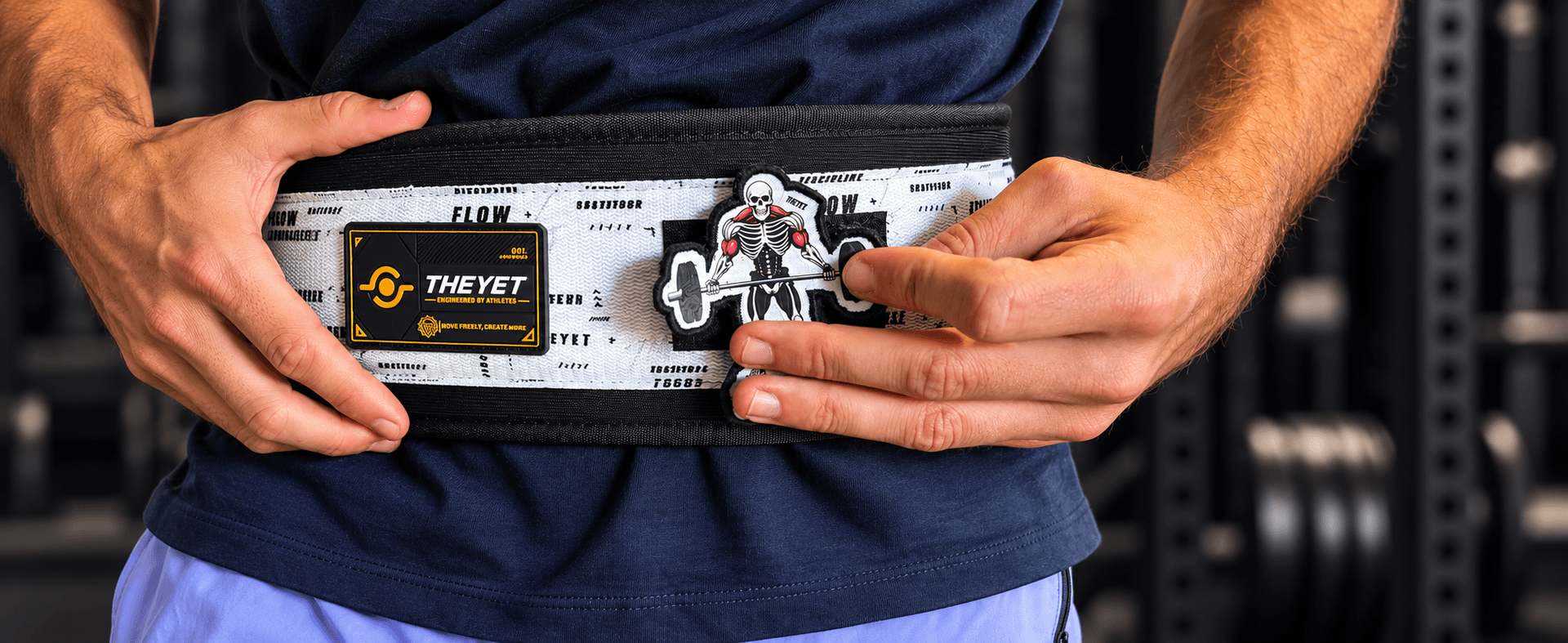
A CrossFit belt should help you brace under load without getting in the way of the movement. It does not lift the weight for you or replace good technique. Its main role is to provide an external surface against which you can create abdominal pressure during demanding lifts.
The right choice depends on your training, the belt's stiffness and width, its closure and the correct size.
For most Cross Training athletes, a light, adjustable belt that is easy to put on and remove is more practical than an extremely rigid model. It can support heavy work while remaining comfortable during transitions between lifting, gymnastics and conditioning.
A belt can be useful for heavy squats, deadlifts, cleans, jerks, snatches and loaded thrusters. You do not need it throughout the whole session, and it may add little value to a light or running-focused WOD.
A CrossFit or weightlifting belt usually prioritises lower bulk, mobility and quick adjustment. A powerlifting belt is generally thicker and more rigid, with maximum stability for heavy squats and deadlifts. Choose for the way you actually train.
Moderate stiffness is the most versatile option for CrossFit and Olympic lifting because it balances support and movement. Greater stiffness is more specific to maximum-strength work. More rigidity is not automatically better.
A wider belt gives you more surface to brace against, but it can interfere with hip flexion and the starting position. A quick hook-and-loop closure is useful in WODs because you can adjust or remove it between movements; a buckle provides a more fixed feel for sessions with fewer transitions.
Measure the circumference where you will wear the belt rather than using your trouser size. The THEYET Freedom 001 reference ranges are M: 60–84 cm, L: 80–100 cm and XL: 94–120 cm. If you fall between sizes, consider where you wear it and how much adjustment you need.
The belt should feel firm without stopping you from breathing or reaching the correct lifting position. Inhale, create pressure through the trunk and brace against the belt. If it restricts breathing or movement, it is probably too tight.
For regular Cross Training, prioritise moderate support, quick adjustment, low bulk and the right size. For maximum-strength work, greater rigidity may be useful. For weightlifting, choose support that does not obstruct speed or bar path.
View THEYET belts or explore more Cross Training equipment.
More content
27/10/2026
Understand the difference between red and yellow lenses, when to use each one and why a day-and-night system can be more practical....
Read article19/10/2026
Choose CrossFit wrist wraps according to support, stiffness, comfort and the movements you train most often....
Read articleWe use analytics cookies to understand how the site is used and improve the experience. They are only enabled if you accept them. Cookie policy.